At the recent Biopharma Analytical Innovation Summit in Malvern, analytical scientists examined the solubility, impurity, and sensitivity challenges that come with a growing wave of peptide drugs, and how lab workflows are adapting to meet them.
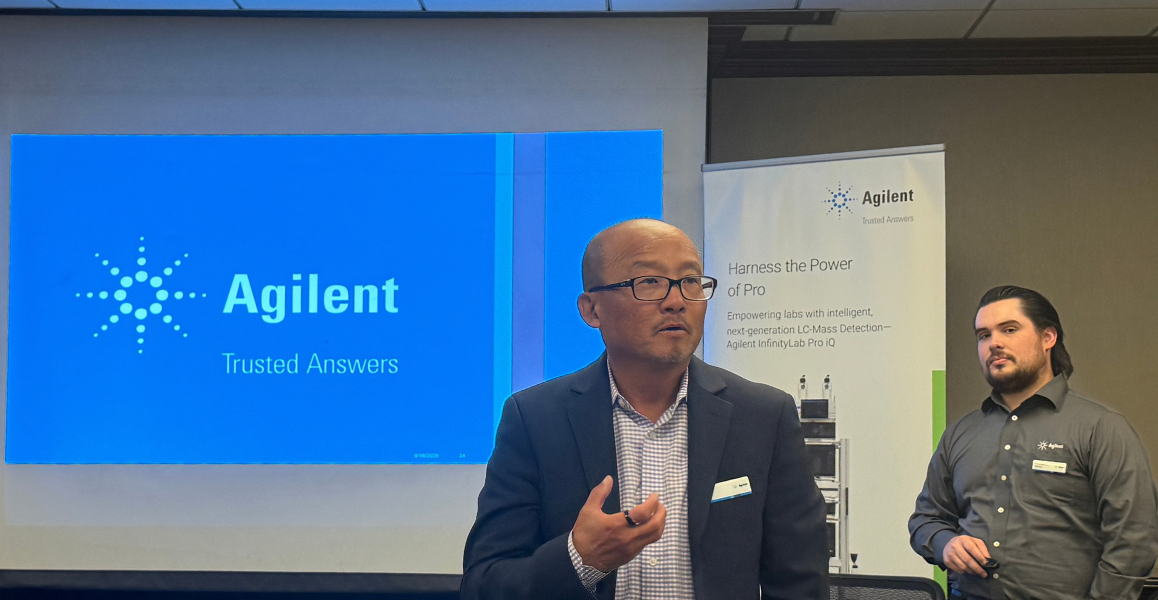
Peptide therapeutics spent decades as a specialized corner of drug development. GLP-1 receptor agonists changed that, and the effect is now felt well beyond the clinic. When Agilent specialist Edward Kim opened the peptide therapeutics track at the recent Biopharma Analytical Innovation Summit in Malvern, he noted that GLP-1s, and the next generation behind them, are the topic he hears about wherever he goes.
Much of what determines whether those molecules succeed happens out of view. In a recent What’s the Buzz?! conversation with BioBuzz, Amir Liba, who leads Agilent’s sales, applications, and technical specialist teams across the U.S. and Canada, described analytical methods as sitting upstream of every marketed drug, testing for efficacy, stability, and safety. Critical quality attributes such as resistance to oxidation can determine whether a molecule is viable at all, even though that work rarely makes headlines the way the drug itself does.
What Makes This Phase Different
Agilent’s Bill Long, who spent roughly two decades in the company’s columns group after earning his PhD at Virginia Commonwealth University, opened the track by describing what makes peptides distinctive. GLP-1 analogs are larger and more structurally complex than typical small-molecule drugs but far smaller than antibodies. He described peptides as occupying a gray area in the USP, sitting somewhere between small molecules and large ones, with analytical expectations drawn partly from each side.
The routes to making them add further variety. Long outlined therapeutic peptides produced through extraction from natural sources, fermentation and other recombinant approaches, and fully synthetic chemistry. Recombinant methods suit longer sequences but take time to establish and are limited to naturally occurring amino acids. Chemical synthesis is faster for shorter peptides but still relies heavily on solvents such as DMF and DMSO, which he said the industry is trying to move away from. Regardless of route, peptides can carry product-related, process-related, and storage-related impurities, including deamidation, oxidation, isomerization, and aggregation, along with residual salts and other components that must be reported.
The field of molecules is widening as well. Agilent’s Tom Walker noted that the analytical workflows presented at the summit are being applied not only to established GLP-1s but to newer analogs now coming to market. Expectations for how methods are managed are also shifting. In the same What’s the Buzz?! episode, Liba discussed how newer ICH guidelines reframe analytical methods as a lifecycle rather than a one-time deliverable.
A Summit Built Around the Handoff to QC
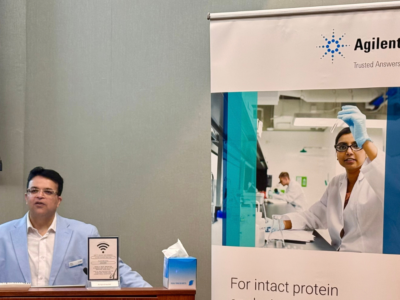
Agilent hosted the Biopharma Analytical Innovation Summit 2026 on September 16 at The Desmond Hotel in Malvern, its first summit of this kind. Agilent built the full day program for scientists moving complex therapeutic modalities from late-stage development into quality control, organized around three modality tracks: peptide therapeutics; oligonucleotides, conjugate oligos, and mRNA; and proteins and antibodies. Agilent said it brought the summit to the Philadelphia region to connect with one of the nation’s most vibrant biopharma communities and share the latest advances in analytical technologies supporting biotherapeutic development and manufacturing.
The summit drew nearly 100 attendees from companies including Johnson & Johnson and Merck as well as Philadelphia startups such as Dispatch Bio, along with experts from the United States Pharmacopeia. As announced ahead of the event, USP opened the day with a plenary on closing gaps in monoclonal antibody characterization.
The peptide track, moderated by Kim, focused on impurity profiling, column chemistry, and UHPLC characterization for a GLP-1–driven pipeline. Kim asked attendees to keep the questions coming, and sessions from Long and Walker laid out where peptide analysis gets difficult in practice.
Where the Analysis Gets Hard
Some of the practical problems start before a sample reaches the column. Several GLP-1 analogs are difficult to dissolve, and as Long put it, HPLC does not analyze what is not dissolved. Stronger solvents solve that problem but create another: injected in meaningful volumes, the solvent carries the analyte through the column, smearing or splitting peaks. The usual workarounds each carry a cost. Diluting samples or cutting injection volumes sacrifices sensitivity, solvent exchange is time-consuming and can damage the compound, and adding tubing or mixing volume between the injector and column requires manual changes to the system. Long noted that those manual changes make a method less transferable than labs would like.
Mobile phase selection prompted the liveliest exchange of the track. Trifluoroacetic acid gives clean peptide chromatography but suppresses mass spectrometry signal, while formic acid is friendlier to the mass spectrometer but can leave peaks less sharp. One attendee, drawing on experience with polymeric columns from graduate school, pressed on both column cost-efficiency and TFA suppression, and the discussion moved through low TFA concentrations, added acids, and difluoroacetic acid. Long called it an optimization problem, a matter of finding the balance between what a lab needs to detect and how it needs to separate it.
Walker, an LC-MS application scientist based at Agilent’s Lexington, Massachusetts site, showed why characterization goes well beyond detecting that something has changed. Working with colleagues Rachel Franklin and Xi Chu, his team stressed liraglutide by leaving it at room temperature in an autosampler for several days and by forcibly oxidizing it with hydrogen peroxide. Oxidation appeared not as a single species but as mono-, di-, and tri-oxidized forms, along with conversion of tryptophan to kynurenine, and Walker noted that some peaks may also reflect structural isomers. Pinpointing where on the sequence each change occurred required fragmentation-level mass spectrometry, including electron capture dissociation, which can distinguish residues of identical mass such as leucine and isoleucine, or aspartate and isoaspartate.
The same molecules must also be measured at trace levels in biological samples. Walker presented work led by Chu at Agilent’s Little Falls site quantifying semaglutide and tirzepatide in human plasma. In that work, automated cleanup using reverse-phase cartridges gave a much better response than a conventional protein precipitation step.
How Tool Providers Are Responding
The sessions also showed how Agilent is positioning itself to support peptide developers and manufacturers. Walker described a tiered workflow that screens stressed samples on a compact single quadrupole mass spectrometer, moves identified impurities to a high-resolution Q-TOF for deeper analysis and localization, and uses a triple quadrupole system for quantitation.
Automation runs through that approach. Walker described instruments that run tuning checks on a schedule, load worklists at startup, shut down overnight, and generate customized reports. “We’re trying to build in as much automation to make everyone’s lives easier as we possibly can,” he said. Long emphasized method continuity, presenting a feed-injection approach that handles strong-solvent samples without manual modification to the system while letting labs keep using legacy methods they have already written. For QC organizations, where changing a method carries real regulatory and operational cost, that often matters as much as raw performance.
Column chemistry remains central. Long traced the lineage of Agilent’s columns to Jack Kirkland’s ultra-pure silica work at DuPont in the late 1980s, which he credited with helping drive modern pharmaceutical analysis. He described a portfolio spanning silica-based, polymeric, charged-surface, and HILIC phases, noted that Agilent manufactures its own silica at its plant in Newport, and pointed to newer inert-coated column hardware designed to reduce the need for priming, the practice of injecting sample ahead of an analysis to condition the column. He called priming part of the art of being a scientist.
Agilent leadership frames the challenge as organizational as well as technical. In his What’s the Buzz?! conversation, Liba argued that the industry largely has the technology and talent it needs, and that the more common bottleneck is aligning people around what the data means and what action to take next.
What It Means for Greater Philadelphia
The Desmond sits at the center of one of the country’s densest concentrations of drug developers and contract manufacturers, and as BioBuzz has noted, that density makes talent a strategic resource companies must deliberately source and retain, a theme central to the summit.
As peptide programs grow more complex and move from development into manufacturing, the scientists who can work across chromatography and mass spectrometry, and who understand both the chemistry of the molecule and the demands of a regulated QC lab, are becoming central to how quickly those programs advance. The practitioners comparing notes on solvents, columns, and fragmentation techniques in Malvern represent the regional analytical community that the next phase of peptide therapeutics will depend on.
Learn more about Agilent’s Biopharma Solutions.