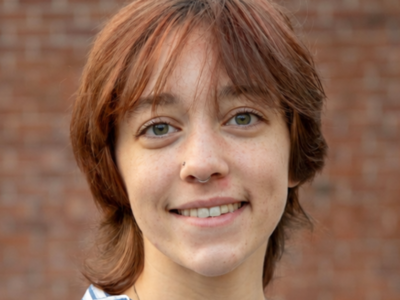
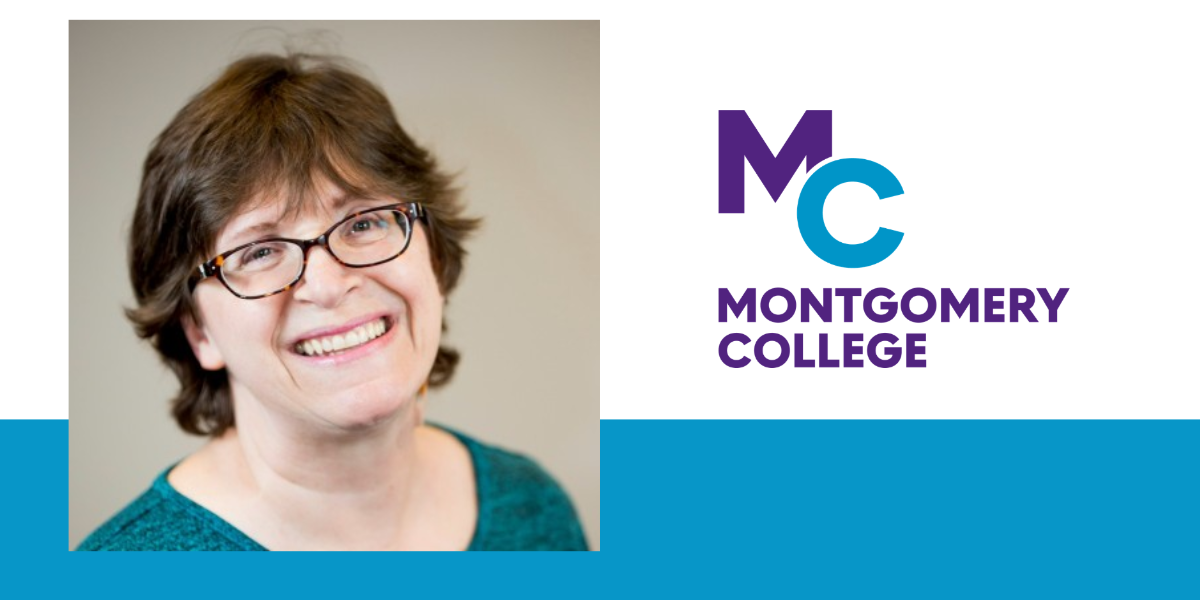
For 25 years, Dr. Lori M. Kelman’s work at Montgomery College came down to one idea: give students the skills biotech companies need and help them build great careers. Now retired as Professor of Biotechnology and former Department Chair, she leaves behind a generation of graduates working across the Bio Health Capital Region, and a program that grew up alongside the industry it serves.
BioBuzz caught up with Dr. Kelman to look back on that journey, how the region has changed, and her advice for the students and mentors who come next.
A Scientist Finds Her Way to the Classroom
Lori came to teaching by way of the lab. She earned an AB in Biochemistry from Mount Holyoke College and an MS in Biology from St. John’s University, then a PhD in Molecular Biology at Weill Cornell Medical College, where she studied yeast histone gene regulation.
She went on to spend 10 years on the faculty of Iona University, earning an MBA in Management along the way.
She had no plans to leave her tenured position in New York. But when her husband’s job search brought the family to Maryland, she made the move. “The two-body problem is real,” she said. “Luckily, it turns out that Montgomery County is a great place to raise a family.”
Knowing little about the area, she asked around about teaching at the college level, and everyone pointed her to Montgomery College. MC Germantown happened to be adding a Biotechnology faculty member. Meeting Dr. Collins Jones, who created the program’s curriculum and led its growth, sealed the decision.
Teaching what industry needs
Jones and Lori built the program on a simple practice: ask employers what they need. Jones talked regularly with local companies about what they wanted in an entry-level hire, and the program delivered both the knowledge and the hands-on skills to match.
“We worked closely with local companies as they grew, providing a workforce for them, and getting our students great starts in a great biotech career,” Lori said.
That commitment took physical form in the Bioscience Education Center at MC Germantown. Alongside standard biology and chemistry labs, it houses a custom-designed cGMP pilot-scale production training suite, where students learn cell culture and aseptic technique in a setting that mirrors industry.
Lori stayed on the faculty for all 25 years, serving several years as Department Chair and as principal investigator on several grants. She credits much of the program’s success to her partnership with Jones: their skills were complementary, and they divided the work so each could focus on what they did best. “It was a great partnership,” she said, “and it’s what I miss most in my retirement.”
Growing with the region
As the program grew, so did the industry around it. During Lori’s time at MC, the region’s biotech economy shifted from DNA sequencing to vaccines and monoclonal antibodies, and now to cell and gene therapies. Homegrown companies such as MedImmune and BioReliance were acquired and became part of AstraZeneca and MilliporeSigma, while others, including Quality Biological and Meso Scale Diagnostics, have anchored the region for decades.
Where it goes next, she won’t guess. “If I could predict the future I’d be a billionaire,” she said, “but I think the region will continue to grow and evolve.”
Showing students what’s possible
That growth means opportunity, and Lori believes too few students see it. She calls biotechnology a defining industry of this century. Its drugs and diagnostics are already changing outcomes for patients with genetic conditions, chronic diseases and cancers, and peptide drugs such as GLP-1 receptor agonists are only the latest success.
Yet in her experience, most college STEM students know little about the industry. “They know that they can become a physician, or earn a PhD, but don’t know about the plethora of other positions available,” she said. Most are pleasantly surprised to learn how many roles exist locally, and that a two-year or four-year degree is enough to get started. An MD or PhD is not required for most industry jobs.
Her advice reaches beyond biotech: find something you love, learn about it, and do it. Underneath it is her belief in a liberal arts foundation of lifelong learning, an open mind, and the ability to judge the quality of information. STEM education, she argues, teaches people to look for evidence to support a position, “and this is more important than ever now.”
Advice for those shaping what’s next
For the educators, employers and mentors preparing the next generation, Lori’s advice echoes the approach she and Jones took at MC: stay current, build and maintain personal connections, and keep communicating.
“People call it a ‘biotech ecosystem’ because there are many different players, and they must work together to maintain the health of the region,” she said. “Be a part of the ecosystem.”
Some things can’t be measured
Asked for a favorite memory, Lori says there are too many to name. To her, every student who earned a job, a promotion, a degree or a certificate is a success story, and proof that the program’s industry-focused approach works.
Many former students still keep in touch, and she calls it an honor to remain part of their lives. “I’ve even got a nice collection of baby pictures as former students grow their families!”
From all of us at BioBuzz, congratulations, Lori, and thank you for 25 years of building careers and helping shape the future of the BioHealth Capital Region.