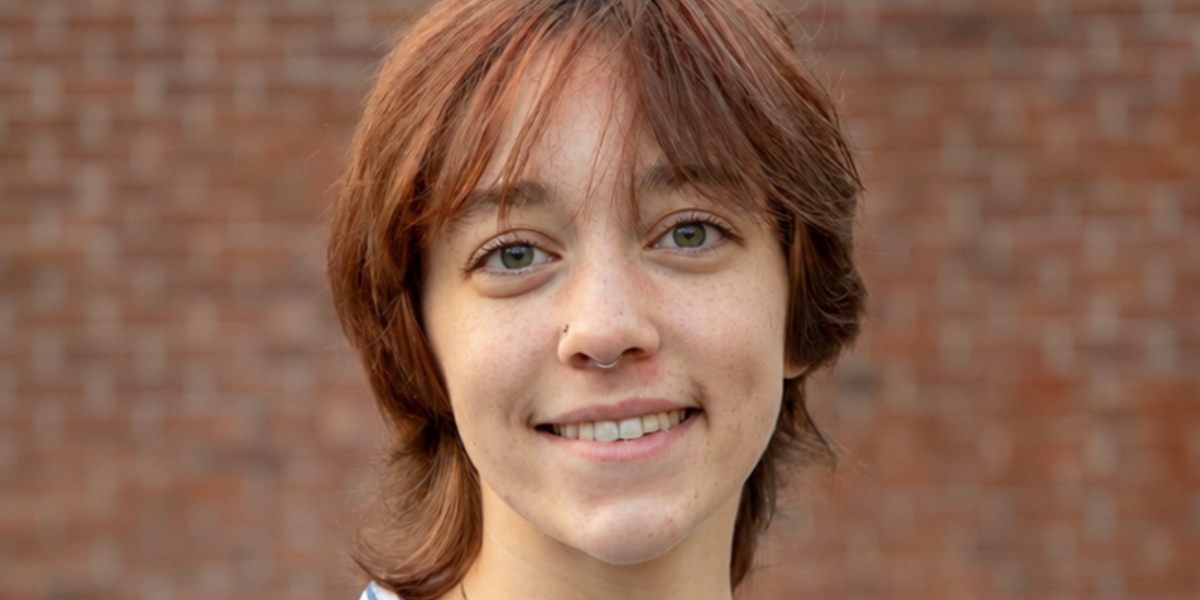
BioBuzz’s Buzzin’ Brood Student Spotlight series celebrates the future of life sciences talent — and the programs, institutions, and organizations investing in them.
Name: Raeann Kalinowski
Hometown: Frederick, Maryland
Institution: Johns Hopkins University
Degree: M.S. Regenerative and Stem Cell Technologies (in progress); B.S. Materials Science and Engineering
Class: 2027
Role: Graduate Researcher, Boheler Lab
Clubs/Activities: Program Operations Specialist, STEM Champions of Baltimore (Maryland Science Olympiad); former Head Mentor, Johns Hopkins Charm City STEM League
For Raeann Kalinowski, the path into regenerative medicine started with a simple question. While electrospinning polymer solutions into fine fibers for her senior design project at Johns Hopkins University, she began to wonder what would happen if cells grew on something she had made.
That question led the Materials Science and Engineering graduate into Johns Hopkins’ master’s program in Regenerative and Stem Cell Technologies, where she is now in her second year. Her research has ranged from conductive polymer electrodes built with PEDOT:PSS, MXenes, and PDMS to her current thesis work on PVA/silk fibroin hydrogels designed to help iPSC-derived cardiomyocytes mature.
Outside the lab, Raeann spent four years as Head Mentor with the Johns Hopkins Charm City STEM League, still tutors, and now helps run Maryland Science Olympiad programming for Baltimore City students as a Program Operations Specialist with STEM Champions of Baltimore. She hopes to build a faculty career in biomedical engineering that combines biomaterials research with teaching.
We sat down with Raeann to learn more about her path into regenerative medicine, what’s exciting her right now, and where she hopes to go next.
How did you get here?
I’m from Frederick, Maryland, and I came to Johns Hopkins for Materials Science and Engineering. I chose materials because of the variety of possible applications, especially with biomaterials. In my senior design project, I used electrospinning to make substrates, spinning polymer solutions into fine fibers, and that was where I started wondering what would happen if cells grew on something I had made.
That question pulled me into the master’s program in Regenerative and Stem Cell Technologies, where I’m now in my second year, graduating in May 2027. In the Thakor Lab, I’ve worked on conductive polymer electrodes using PEDOT:PSS, MXenes, and PDMS. In my thesis work, I’m building PVA/silk fibroin hydrogels to help iPSC-derived cardiomyocytes mature.
Alongside the research, I spent four years as Head Mentor with the Johns Hopkins Charm City STEM League, working with K-12 students across Baltimore City schools, and I still tutor. Explaining a concept to a ten-year-old until it clicks taught me more about what I understand than any exam did. My goal is a faculty career in biomedical engineering, working with biomaterials, tissue engineering, and regenerative medicine for cardiac, neural, and muscular tissues, where I can do the research and teach the next group of students.
What is currently blowing your mind right now?
Getting an idea from a lab to a patient. For a class last term, I built a mock company pitch around a biodegradable nerve conduit, and researching it taught me that having a great idea is only a small part of the work. There are regulations, funding, manufacturing, and people with very different expertise who all have to line up. It changed how I think about my own research, because now I ask who could use this, not just whether it works. I also read about stem cell therapy for spinal cord injury, which is still early but gives me real hope for people whose injuries used to have no options.
If you could explain yourself right now in only emojis…
🧶🧬❤️🔥⚡🥶🥵🌲🧪
The 🧶 is for crochet, which I do for fun, and I think it’s the same part of my brain that loves biomaterials: building something out of fibers. 🧬 and ❤️🔥 are my research: stem cells and beating cardiomyocytes. ⚡ is for the conductive polymers I work with, because I want materials that can talk to tissue electrically. 🌲 is for the outdoors, which is where I reset. 🧑🏫 is for mentoring and tutoring, which I’ve done for years and which I’m not planning to give up. 🧪 is for the experiments that don’t work the first time, reminding me to keep trying and keep innovating.
Together, I think they say that I’m analytical and creative, hands-on, and happiest when I’m making something and explaining it to someone else.
If you could travel into the future… what does your LinkedIn headline say?
In ten years, I hope I’m working in a lab that builds biomaterials that help damaged tissue regain function, and that I’m teaching and mentoring students the way mentors once helped me. To get there, I plan to finish my master’s in May 2027 and begin work in a research role afterwards.
Along the way, I want to connect with people in the life science industry who work on translating biomaterials and regenerative therapies, from early-stage startups to established companies. I’d like to learn how the work moves from the bench to clinical use, find collaborators who can tell me what the field needs, and eventually help my future students find paths into industry if that’s what they want.
What would people be surprised to know about you?
I crochet and cross-stitch, and I think it makes me better at my job. Most people expect a biomaterials researcher to spend free time on something lab-adjacent, but I’m often at home with yarn or a half-finished pattern. It also connects to my research more than I thought. Both involve fibers, structure, and patience, and both depend on getting small repeated details right. An electrospun scaffold and a stitched pattern each look like a mess if you stop in the middle and like something intentional once the pattern emerges. I also spend a lot of my time outdoors, and I think I need both: something precise to focus on, and somewhere without a plan to clear my head.