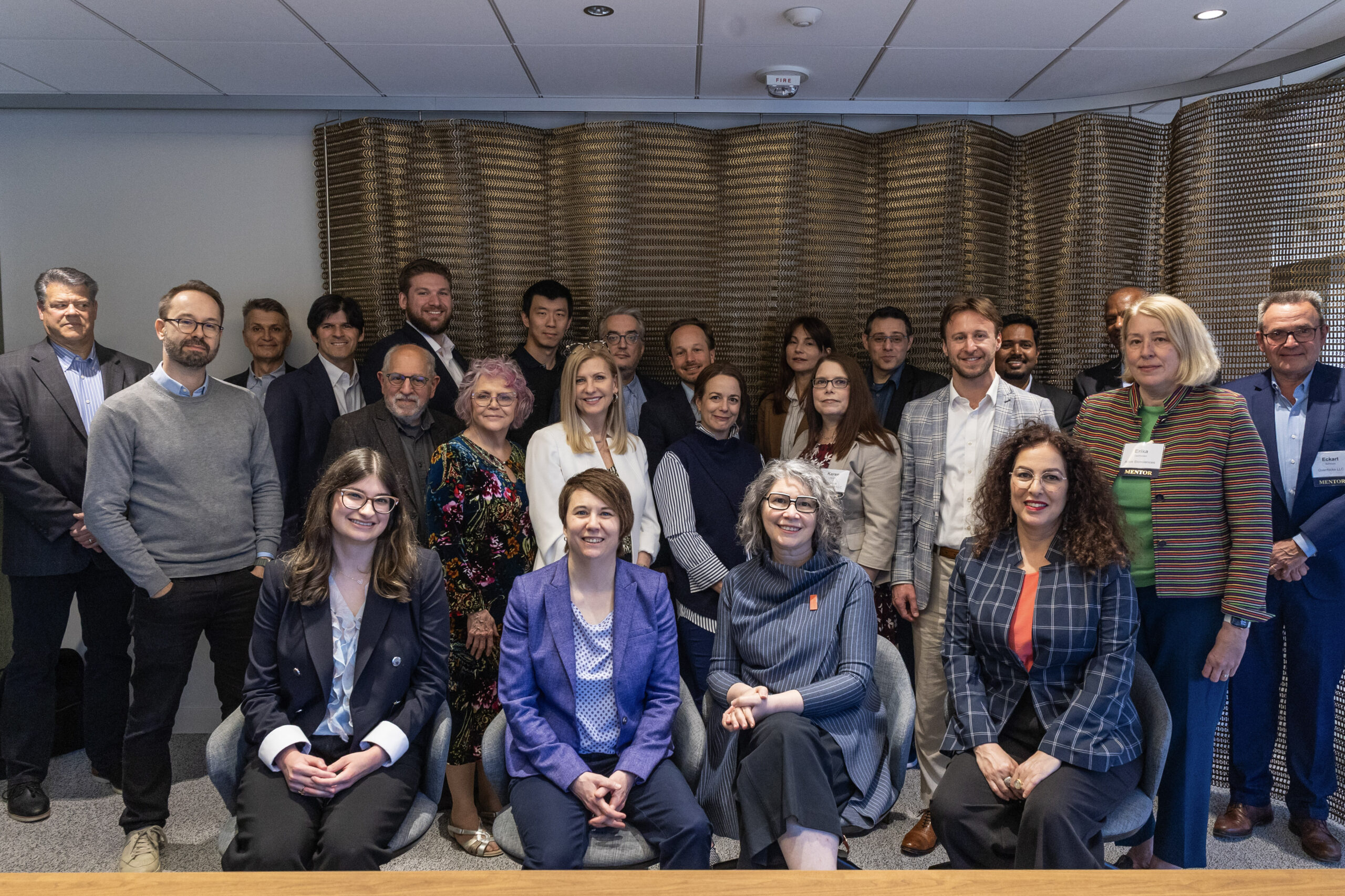
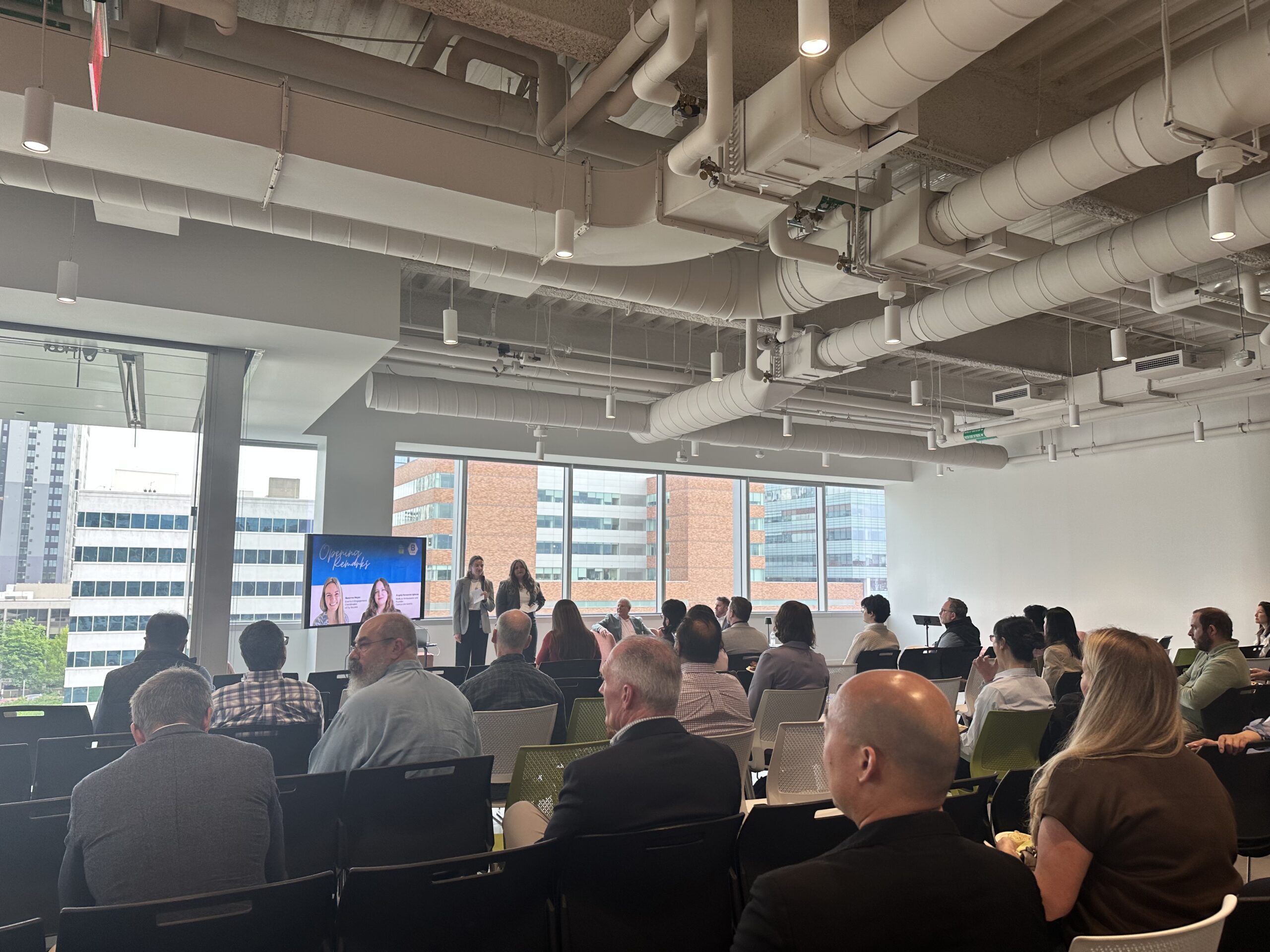
At our most recent Insights to Impact event in the Philadelphia Region “From Lab to GMP: Building a Clinical Ready Biotech,” industry leaders pulled back the curtain on one of the least glamorous, but most critical, parts of biotech innovation: operational execution.
While scientific breakthroughs often dominate headlines, the conversations throughout the evening made one thing clear: great science alone does not guarantee clinical readiness or commercial success.
Speakers from biotech startups, CDMOs, validation firms, and manufacturing operations shared candid insights about tech transfer, GMP readiness, CMC strategy, validation planning, supply chain risk, and the operational discipline required to successfully move therapies from discovery into scalable manufacturing.
One of the fireside chats featured Martin Lehr, CEO of Context Therapeutics, alongside Adam Dinerman, Sr Vice President, Head of CMC, Aro Biotherapeutics, discussing the realities of CDMO selection, scaling complex modalities, and managing manufacturing risk in early-stage biotech companies.
For Dinerman, operational simplicity and strategic planning become essential as companies scale increasingly sophisticated therapies.
“You want to keep things simple,” he explained while discussing analytical testing and distributed manufacturing networks. “Because you need to be very careful managing your resources and your costs when you start out.”
The conversation highlighted just how operationally complex modern biologics manufacturing has become — particularly for emerging therapeutic platforms involving multiple components, novel modalities, and integrated supply chains.
Mendelsohn described how Aro Biotherapeutics intentionally built a U.S.-based CDMO network early on to protect intellectual property and manage the complexity of manufacturing a new modality during the height of the COVID-era supply chain disruptions.
But the discussion also acknowledged the growing pressure biotech companies face around cost, tariffs, and global manufacturing strategy.
Lehr reflected on the confusion many smaller biotech companies experienced navigating recent tariff uncertainties and global manufacturing risks.
“The tariffs really disproportionately affected companies like ours,” he said, noting how smaller biotech companies often lack the legal infrastructure and international subsidiaries larger pharmaceutical companies can leverage to reduce exposure.
Beyond manufacturing logistics, the event repeatedly returned to a larger operational truth: scaling biotech companies requires far more than scientific innovation.
A second panel featuring Nathan Roman, Founder and Principal of VMS, and Abhi Patwa, Senior Engineering Manager at Minaris, focused specifically on the operational breakdowns that commonly emerge as companies transition toward GMP readiness and clinical manufacturing execution.
Their discussion centered on validation strategy, quality systems, documentation management, ownership clarity, and the growing complexity of cross-functional execution inside scaling organizations.
“Most scaling problems don’t start with bad science,” Roman explained. “They start with unclear ownership.”
The speakers described how many biotech organizations underestimate the operational burden of GMP execution until projects are already underway, often discovering major validation costs, qualification requirements, and documentation gaps after budgets and timelines have already been approved.
Roman shared an example where a project’s validation costs were identified only after a new lab build had already started, ultimately forcing the project to stop while leadership scrambled to secure funding approvals.
“It’s not because the science failed,” Roman noted. “It’s because validation was engaged too late.”
Patwa emphasized the importance of cross-functional planning from the earliest stages of tech transfer and facility design, arguing that engineering, validation, procurement, manufacturing, and operations teams must all remain aligned throughout the project lifecycle.
The discussion also explored the growing role of AI within GMP and validation workflows.
While both speakers agreed AI can improve documentation development, protocol building, and guidance interpretation, they stressed that human oversight remains essential — particularly in highly regulated environments where execution, compliance, and risk assessment still depend heavily on operational expertise.
One of the strongest themes throughout the evening was that operational maturity increasingly determines whether promising biotech companies can successfully scale.
As therapies become more complex and regulatory expectations continue evolving, the industry’s biggest bottlenecks are often no longer scientific — they are organizational.
Communication gaps, disconnected teams, unclear accountability structures, validation delays, fragmented documentation systems, and operational burnout all surfaced as recurring risks discussed by the panelists.
Still, despite the operational challenges described, the overall tone remained highly solutions-oriented.
The speakers consistently reinforced that companies willing to invest early in structure, cross-functional collaboration, scalable quality systems, and disciplined execution are far better positioned to navigate the transition from innovation to commercialization successfully.
Because in today’s biotech environment, scaling isn’t just about moving faster.
It’s about building organizations capable of sustaining growth, compliance, manufacturing readiness, and operational trust simultaneously.