AstraZeneca is making one of the largest life sciences investments in Maryland history— a $2 billion expansion that will nearly double the size of its flagship Frederick manufacturing site and deepen its roots across the BioHealth Capital Region (BHCR). The move underscores the company’s continued confidence in Maryland and neighboring Virginia following a wave of recent capital commitments across the region.
A Longtime Frederick Anchor Poised for Its Next Chapter
AstraZeneca’s Frederick campus has been a backbone of the state’s biomanufacturing workforce for nearly two decades. Originally built under MedImmune, the Frederick Manufacturing Center grew into one of the region’s most productive large-scale biologics operations, supplying medicines across oncology, respiratory disease, autoimmunity, and rare disease portfolios.
Over the years, the site has evolved from a single-product facility into a diversified, high-throughput biologics engine, benefiting from continued technology modernization and deep partnerships with Maryland’s talent pipeline. Today’s announcement signals the next evolution: a two-fold expansion of commercial manufacturing capacity—and, for the first time, the introduction of production capabilities for AstraZeneca’s expanding rare disease franchise.
The Frederick expansion includes:
- 200 new highly skilled jobs
- 900 construction roles
- Advanced manufacturing equipment leveraging AI, automation, and integrated data systems
- Operational readiness expected in 2029
For Maryland, this is not a small upgrade—it’s a reinvestment in what has quietly become one of the state’s most important drug manufacturing assets.
New Gaithersburg Facility Extends AZ’s R&D and Clinical Manufacturing Footprint
Alongside Frederick, AstraZeneca will develop a new clinical manufacturing facility in Gaithersburg, adding:
- 100 new jobs
- Retention of 400 roles
- 1,000 construction jobs
- A 2029 operational target
Situated near the company’s substantial R&D presence in Montgomery County, the new site will support clinical supply for “innovative molecules,” strengthening the interface between discovery, development, and early-stage manufacturing.
The combined 2,600 jobs supported across both Maryland sites reflect both immediate construction demand and long-term workforce needs—further solidifying AstraZeneca as the state’s largest biopharma employer.
A Regional Strategy: Maryland + Virginia in the Spotlight
This investment is part of AstraZeneca’s broader, unprecedented $50B U.S. manufacturing expansion, which is accelerating across the BioHealth Capital Region.
Recent regional commitments include:
- A new cell therapy manufacturing facility in Rockville, MD
- A new drug substance manufacturing plant in Virginia
- Expansion of the company’s Coppell, Texas site
Just this year in October, AstraZeneca also announced a $4.5B investment in Charlottesville, VA, marketing the largest single manufacturing commitment in AstraZeneca’s global history to build two advanced manufacturing plants — one focused on small-molecule drug substances supporting AstraZeneca’s metabolic and chronic disease portfolio, and a second dedicated to antibody-drug conjugates (ADCs) used in oncology. Together, Maryland and Virginia are now positioned as pillars of AZ’s long-term U.S. supply chain strategy.
For the broader BHCR, this is another validation point: companies with massive global footprints are choosing this region not for one-off projects, but for multi-decade, multi-state, integrated manufacturing ecosystems.
A Signal of Confidence in the BioHealth Capital Region
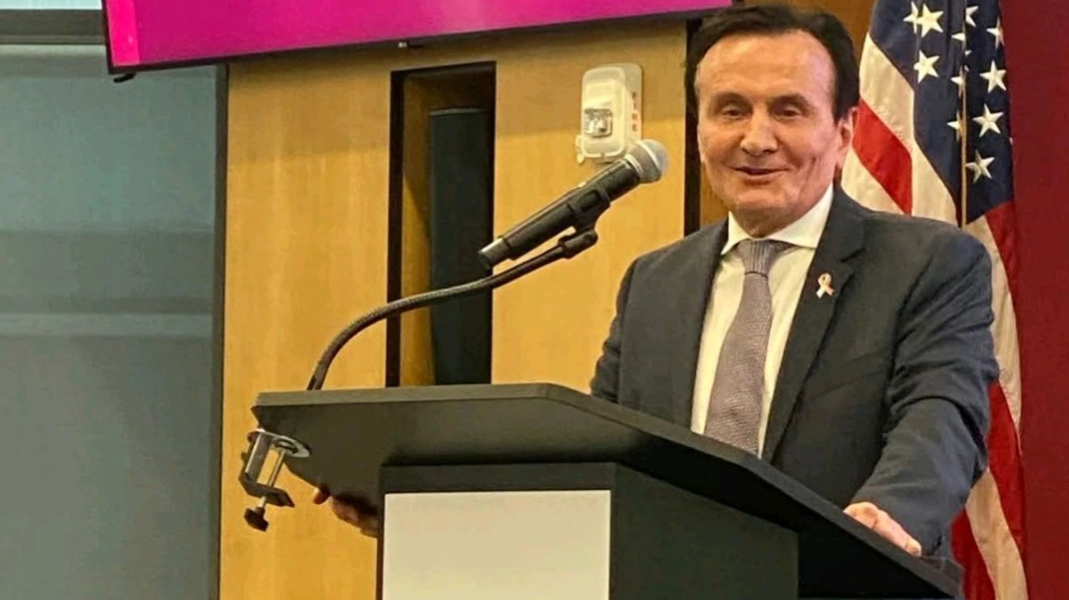
In announcing the investment, CEO Pascal Soriot emphasized Maryland’s central role in AstraZeneca’s U.S. strategy:
“Today marks a landmark moment for Maryland and American patients… we are deepening our long-standing commitment to Maryland – supporting 2,600 jobs, catalyzing economic growth and bringing our extensive rare disease portfolio onshore for the first time.”
The message is unmistakable:
AstraZeneca sees the BioHealth Capital Region not just as a growth market, but as a strategic manufacturing hub capable of sustaining global-scale production.
Maryland’s workforce, infrastructure, and proximity to federal agencies—combined with Virginia’s expanding advanced manufacturing base—create a regional value proposition few markets can match.
What This Means for the Region’s Talent and Employers
For workers, partners, and suppliers, this investment reinforces three major themes:
1. Biomanufacturing Demand Is Accelerating
The Frederick expansion alone will require hundreds of highly skilled bioprocessing professionals, strengthening demand for regional training programs and hands-on workforce development.
2. The Region’s Manufacturing Base Is Diversifying
This expansion brings rare disease manufacturing capabilities into Maryland for the first time—a signal that the state’s workforce is ready for more complex modalities.
3. Cross-State Growth Is Now the Norm
AstraZeneca’s dual commitment to Maryland and Virginia reflects an emerging reality: the BHCR operates as a multi-state, interconnected talent and infrastructure ecosystem.
A New Era of Scale for Maryland’s Biopharma Economy
With this $2B commitment, AstraZeneca is not just expanding facilities—it’s building the next generation of biomanufacturing capacity in one of the most mature and collaborative biotech clusters in the country.
For Frederick, it’s a milestone in a long story of growth.
For Maryland and Virginia, it’s another proof point that sustained investment and coordinated ecosystem-building are paying off.
And for the BioHealth Capital Region, it reinforces a narrative the community has known for years:
The region isn’t just growing—it’s becoming indispensable.