Ginkgo Bioworks, ABL, Isolere Bio, NeuImmune, and ProteoNic Unite Under BARDA’s BioMaP Program to Reinvent Domestic mAb Production
In the high-stakes race to strengthen America’s biomanufacturing resilience, a new $22.2 million project led by Ginkgo Bioworks could signal a turning point. Backed by the Biomedical Advanced Research and Development Authority (BARDA) through its Biopharmaceutical Manufacturing Preparedness Consortium (BioMaP), the initiative aims to dramatically reduce the cost and complexity of producing monoclonal antibodies (mAbs)—a class of biologics essential for both infectious disease response and modern medicine at large.
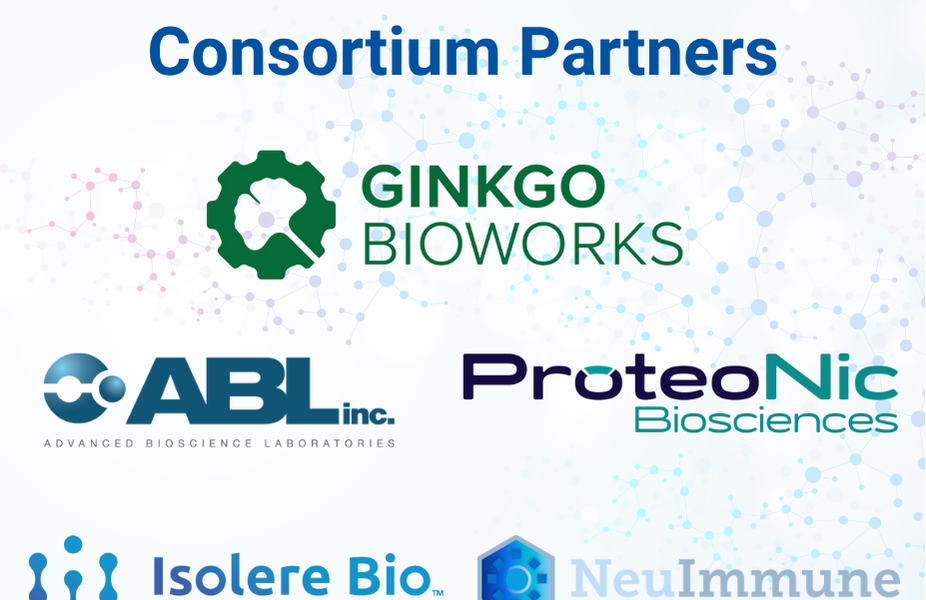
At the center of this effort is a multidisciplinary collaboration spanning the country’s most innovative biotech players. Ginkgo Bioworks will lead a team including ABL, Isolere Bio (a Donaldson Life Sciences business), NeuImmune, and ProteoNic, each bringing a unique capability to the table. Together, they will develop and integrate new technologies that can streamline every step of the antibody manufacturing process, from expression to purification.
The team’s first test case is deeply symbolic: a cocktail of two monoclonal antibodies—1C3 and 1C11—originally discovered and developed by researchers at Emory University to protect against filoviruses such as Ebola and Sudan virus. These diseases, though rare, are among the most lethal infectious threats known to humankind. Producing effective countermeasures quickly and affordably has long been a challenge, especially given that monoclonal antibodies remain among the most expensive therapeutics to manufacture.
Ginkgo Bioworks’ announcement describes the project’s goal succinctly: “to develop innovations that strengthen and reduce the cost of domestic biomanufacturing of monoclonal antibodies (mAbs) to protect against and treat infection by filoviruses such as Ebola (EBOV) and Sudan Viruses (SUDV).”
For ABL, which will lead the production efforts, the project is also about redefining what readiness and efficacy mean in the age of rapid biotechnology advancement. “ABL is proud to collaborate with Ginkgo to provide the product production capabilities in this effort,” said Dr. Timothy Fouts, Chief Scientific Officer at ABL. “We believe the team assembled brings together technology that will change the goal posts for how efficacy is defined against infectious diseases.”
That statement captures the broader potential of this work. While the immediate focus is on anti-filovirus antibodies, the technologies developed through this partnership could have far-reaching implications for the entire biomanufacturing landscape. Monoclonal antibodies are a cornerstone of modern therapeutics, from oncology and autoimmune treatments to vaccines and antiviral therapies. Yet their production is constrained by high costs, complex supply chains, and limited domestic capacity—vulnerabilities laid bare during the COVID-19 pandemic.
By integrating synthetic biology, process automation, and advanced purification techniques, Ginkgo and its partners are working to rewrite that equation. The aim isn’t just to make antibodies cheaper—it’s to make the entire ecosystem more agile and scalable. If successful, the innovations coming out of this project could enable the U.S. to produce critical biologics faster, at lower cost, and with greater independence from fragile global supply networks.
For BARDA, which has long focused on ensuring the nation’s preparedness against emerging biological threats, the BioMaP initiative represents a strategic shift toward platform technologies that offer speed, flexibility, and cost efficiency. Rather than building capabilities in isolation, BARDA is betting on cross-sector collaborations that blend government foresight with private-sector innovation.
This particular collaboration stands out because of its dual promise: immediate utility in producing a key antiviral therapeutic and long-term value in transforming the economics of biomanufacturing. It’s not just a project—it’s a prototype for how public and private sectors can co-develop infrastructure for rapid response and scalable production.
As Ginkgo Bioworks and its partners push forward, their work reflects a broader truth emerging across the biotech industry: innovation is no longer just about discovery—it’s about distribution. The ability to manufacture complex biologics quickly and affordably may well define the next decade of global health security.
If the BioMaP consortium succeeds, the U.S. could soon find itself with a more resilient, cost-effective, and responsive biomanufacturing ecosystem—one capable of delivering lifesaving biologics not just during the next crisis, but every day after.