Winston-Salem startup BMI OrganBank has received a Breakthrough Device designation from the FDA for its kidney preservation device, which aims to significantly increase the utilization of donated kidneys.
This new technology could greatly reduce the kidney waitlist, which currently stands at almost 100,000 in the U.S., with an average wait time of 3 to 5 years.
“The FDA grants Breakthrough Device designation to a small set of companies and products when they see exceptional potential to save lives and an unmet need that’s not being addressed by other medical devices,” said Robert Neusner, President and COO of BMI OrganBank.
“With this designation, we get more intense engagement from the FDA that can move our product into clinical studies sooner. It can also help us get the product into the hands of doctors to save lives sooner.”
Expanding the organ transplant pool
Today, thousands of donated kidneys don’t end up being used. This happens because current kidney preservation technologies rely on cold temperatures, making it difficult to evaluate kidney function before transplant. Donated kidneys are also vulnerable to injury when stored at cold temperatures, and transplant surgeons can be reluctant to use them after 10-12 hours outside of the body. BMI OrganBank’s machine perfusion platform was designed to overcome these challenges.
“We’re bringing a technology to the transplant space with the vision to enable higher utilization of kidneys that are donated today,” said Carrie DiMarzio, co-founder and CEO of BMI OrganBank.
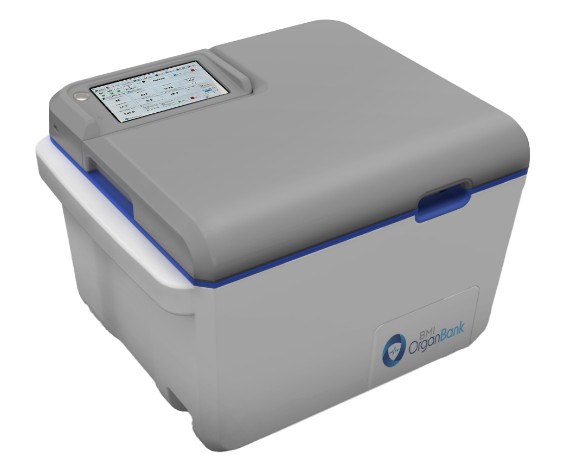
The new device is about the size of a desktop printer and preserves kidneys at room temperature. While in the machine, the organ continues to metabolize slowly while “resting,” supported by perfusion fluid that delivers oxygen in place of blood and a special pump that mimics the beating of the heart.
During this time, transplant surgeons can evaluate the functioning of the donated kidney using objective data provided by the system, an improvement over today’s more subjective assessments.
The company’s preclinical studies suggest that kidneys preserved using the new system not only last longer but are more likely to begin working immediately after transplant. This is an improvement over traditional kidney preservation methods, which often result in delayed kidney function after transplant.
Building on these promising results, the company is now preparing for clinical studies, which it plans to begin next year. It is also continuing the development of a pipeline of innovations for assessing and preserving other types of donated organs.
A North Carolina advantage
BMI OrganBank has deep roots in the state’s life sciences ecosystem. The company has received critical support from the North Carolina Biotechnology Center in the form of two $250,000 Small Business Research Loans.
The first NCBiotech loan, awarded in 2020, supported studies that generated the data needed to secure a $3.7 million Phase II Small Business Innovation Research (SBIR) grant from the National Institutes of Health, advancing development of the kidney preservation technology. The second loan in 2023 supported the design of the final device and activities necessary for FDA approval.
“NCBiotech has also been incredibly valuable in making introductions,” said Neusner. “We’ve asked them about people with clinical study expertise and mentors who could advise us on funding a company at this stage. We can put the call out, and they’ll share it with others who are willing to have a conversation or join our team.”
In 2021, BMI OrganBank became the first tenant of the Wake Forest Institute for Regenerative Medicine Innovation Accelerator. Through the RegenMed Development Organization (ReMDO) testbed there, the company gained access to a small-scale manufacturing facility and a wet lab, which were key to product development. The Innovation Accelerator is in Winston-Salem’s Innovation Quarter, developed by Wexford Science & Technology, which has since invested in BMI OrganBank.
Advancing through collaboration
Partnerships with Duke University, University of North Carolina at Chapel Hill, and, more recently, Carolinas Medical Center and LifeShare Carolinas (both part of Advocate Health) have also been beneficial to the company.
“Our collaborative partnership with Advocate Health also grew out of our time in the Innovation Accelerator, and their support of pilot studies with our platforms has been very valuable,” said DiMarzio. “Having access to three North Carolina transplant centers has been a huge force multiplier for us.”
Alongside these collaborations, BMI OrganBank also supports and develops early-career talent. “One of the best parts of this company is the opportunities we give to entry-level engineers and scientists, who have all been from N.C. universities,” said Neusner. “We also host summer interns, several of whom have gone on to the state’s medical or veterinary schools.”