Frederick, Maryland, has quietly built one of the most diverse and accessible biotech workforces in the Mid-Atlantic — and judging by the insights from a recent “Growing Biotech Talent” panel, the momentum is only accelerating.
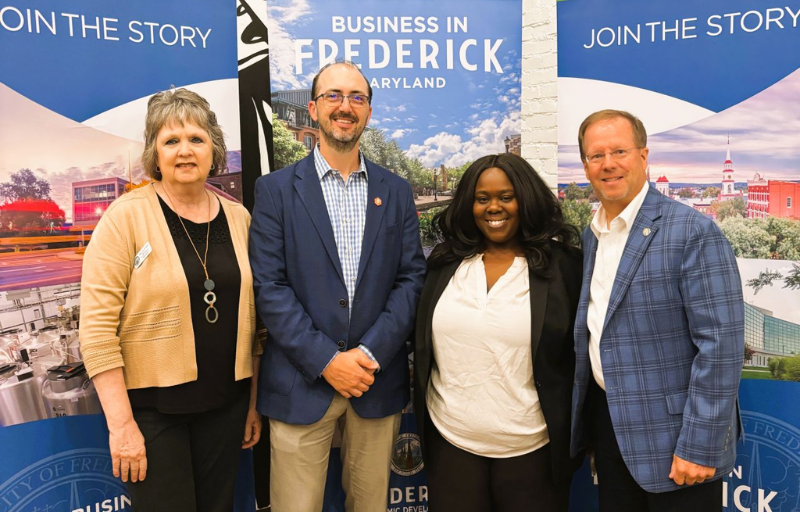
Hosted by Frederick County Workforce Services and moderated by Chris Frew, CEO of BioBuzz Networks and Workforce Genetics, the discussion brought together three leaders who shape hiring strategies for some of the region’s most prominent biotech employers:
- Mary Beth Leibig, Director of Human Resources, AstraZeneca Frederick Manufacturing Center
- Adam Eifert, Sr. Manager, Operations, Thermo Fisher Scientific
- Jillian Mahoney, Sr. Talent Acquisition Specialist, Precision for Medicine
The conversation touched on the region’s competitive advantages, shifting skill needs in a digital age, the importance of soft skills and networking, and what both employers and job seekers should know to succeed in Frederick’s thriving life sciences scene.
Frederick’s Competitive Edge: Accessibility, Scale, and Community
If there was one word that all three panelists returned to repeatedly, it was “accessibility” — both in location and opportunity.
“We’re centralized,” said Eifert. “You can live in Pennsylvania, Virginia, or West Virginia and easily commute to Frederick. That makes Frederick a really good hub for biotech — and for a large, diverse talent pool to tap into.”
For Mahoney, who recruits for Precision for Medicine’s CRO operations in Frederick, the city’s transformation is striking. “When I first started recruiting, people would say, ‘Frederick’s up-and-coming.’ Now we’re living in it. The industry here speaks for itself — and the community is a big part of that sell.”
Leibig emphasized that Frederick’s biotech sector, particularly in manufacturing, makes the industry more accessible to workers with a wide range of backgrounds. “We have employees from 21 to over 70, from high school graduates — many with military experience — to PhDs. That breadth creates entry points for a broad range of talent.”
Manufacturing Muscle Meets Career Mobility
Unlike Baltimore’s more research-heavy biotech scene, Frederick’s ecosystem leans strongly toward manufacturing and late-stage production — from AstraZeneca’s nine commercial drug products to Thermo Fisher’s in vitro diagnostics for cancer treatment.
That focus on production, combined with career mobility inside large employers, means workers can often start in one role and grow into another. “Once you get in, you can build a career here,” said Frew during the discussion.
Eifert noted that within Thermo Fisher’s Frederick footprint alone, roles range from distribution and manufacturing to R&D and even a global cybersecurity center of excellence. “That diversity of functions means we can offer multiple career pathways under one roof.”
Digital Skills and AI Are Now Core Competencies
Across all three companies, technology is changing job expectations — and creating new opportunities for those ready to adapt.
Leibig shared that AstraZeneca Frederick is a “digital lighthouse” site, piloting tools like predictive analytics and internal AI platforms. “We’re looking for innovators who can think differently about how to manufacture drug substance more efficiently. That includes being comfortable using digital tools to move knowledge to the shop floor faster.”
Eifert added, “We’re focusing on more digital applications and AI. Even knowledge of platforms like ChatGPT — how to use them to track, analyze, and communicate data — can be a differentiator.”
For job seekers, this means demonstrating not just familiarity with tools, but how they’ve applied them to solve problems. As Mahoney pointed out, even something as simple as an updated, keyword-optimized LinkedIn profile can determine whether a recruiter’s AI search finds you.
Soft Skills, Networking, and the Human Factor
While digital fluency is rising in importance, the panelists stressed that human skills — communication, collaboration, and critical thinking — are still essential.
Post-COVID flexibility has made over-communication more important than ever. “It’s easy to send a Teams message,” said Eifert, “but real problem-solving still requires getting in a room and collaborating in person.”
Leibig noted that effective knowledge sharing — documenting and explaining processes so others can replicate them — is a growing differentiator in manufacturing environments.
Networking also remains a powerful tool in Frederick’s close-knit biotech community. “This industry is small, and Frederick feels even smaller,” said Mahoney. “After events like this, connect on LinkedIn. Sometimes a quick message has led me to find great candidates I might have missed in the application stack.”
Advice for Career Transitioners and New Entrants
For professionals looking to break into biotech or shift from another industry, the panelists offered practical guidance:
- Tailor your resume to the role: Use the job description as a guide and highlight transferable skills.
- Use a skills section: Bullet out specific technologies and competencies to align with AI-based applicant tracking systems.
- Leverage cover letters: Especially when your background isn’t an obvious match, use a short, compelling cover letter to tell your story.
- Network intentionally: Build connections with both hiring managers and peers — even fellow job seekers.
“If you feel like you’re a good fit for the role but don’t know how to articulate your resume… make a cover letter. It can be short, but that’ll help tell the story before you can even get to the interview,” shared Mahoney.
Leibig also drew a parallel to her own experience pivoting from financial services in New York to biotech in Frederick. “You need to think about what you want to be doing, where you want to live, and what skills you have. Then position yourself for the opportunities that exist here.”
The Frederick Opportunity
Frederick’s biotech sector is no longer “emerging” — it’s established, diverse, and still growing. With a strong manufacturing base, career mobility, and a culture that blends technological innovation with close community ties, it’s a market where both companies and talent can thrive.
As Frew summed up, “Frederick is one of the most engaged, committed biotech ecosystems we work with anywhere in the country. If you’re working here or thinking about it, you should be proud — and you should get connected.”