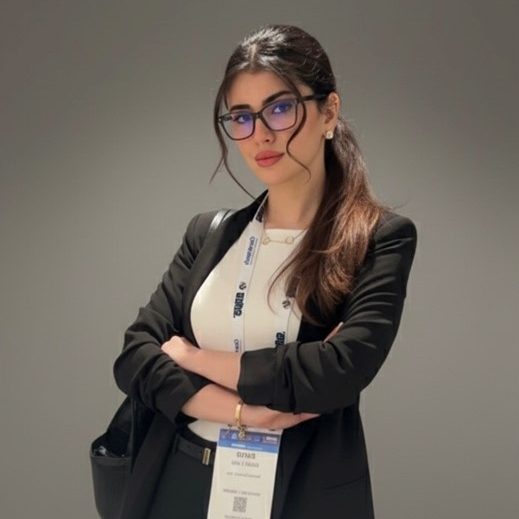
For Sarah Faizy, curiosity and compassion go hand in hand. From her start in oncology research at the NIH to her current leadership role at MacroGenics, she’s built a career grounded in scientific rigor, collaboration, and the belief that small actions create big impact. We sat down with Sarah to learn about her journey, the work that inspires her, and the purpose that keeps her going.
Q: How did you first get started in life sciences, and what led you to your current role at MacroGenics?
I actually began my career at the National Institutes of Health, working in oncology research. At the time, I thought I’d stay in academia or government research—industry felt uncertain. But after graduate school, I transitioned into GLP (preclinical) work, then moved into GMP (manufacturing) roles.
When I joined AstraZeneca, I was hands-on with therapeutic monoclonal antibodies targeting oncology and rare diseases. That’s what reignited my passion for industry—the ability to see how science translates into therapies that impact patients directly.
Coming to MacroGenics felt like a full-circle moment. As a mid-sized company focused entirely on oncology, it’s given me the chance to stay close to the science while growing as a leader.
Q: What does your work in Quality Control entail, and what might surprise people about it?
QC often gets stereotyped as repetitive or routine—but that couldn’t be further from the truth. My team is part of QC Analytical, one of three departments alongside Microbiology and Operations. We handle potency and residuals methods, including bioassays and are responsible for stability and release testing—critical steps that ensure product quality and patient safety.
We’re involved in far more science than people might realize. From method troubleshooting to contributing to IND data packages, we touch every stage. It’s not just “running samples”—we’re part of the scientific decision-making that drives a product toward patients.
What keeps you motivated in your work and at MacroGenics?
For me, it’s both the science and the people. Every small decision I make contributes to something much bigger, and that’s incredibly motivating. I’ve also built an amazing team—people who are passionate, collaborative, and dedicated to patients.
MacroGenics has been the most supportive environment I’ve worked in. Leadership truly values input at all levels, and there’s a real sense of respect and trust. It’s not “we’re a family,” but it is a culture where people care about each other and the mission.
Q: You’ve spoken about the importance of advocating for yourself and connecting with others. What career advice has guided you most?
Two things:
First, advocate for yourself. Especially as a woman in science, you have to speak up for your ideas and your growth. I used to think hard work alone would get me noticed, but collaboration and communication are just as important.
Second, learn people. Science is built on teamwork—no one succeeds alone. Understanding others, communicating well, and building trust can take you further than technical skills alone.
Q: Outside of work, what inspires or drives you?
I’ve always loved teaching and mentoring. I used to tutor and teach science and math, and I still volunteer through Islamic Relief and local mentorship programs in Northern Virginia.
Long-term, I hope to open a girls’ school in Central Asia—ideally with a small clinic next to it to provide free education and healthcare. Education is such a privilege, and I’d love to help make it more accessible for young women who don’t have that opportunity.
In Conversation With is a BioBuzz series celebrating the people who power the life sciences — highlighting their journeys, passions, and the communities they build along the way.