Industry Leader, Stephen M. Perry, outlined a future where trust, healthcare, and biotech economics are transformed by blockchain, AI, and rising startup innovation, urging leaders to embrace transparency, adaptability, and optimism as the industry approaches a defining reset.
Artificial intelligence isn’t just speeding up innovation — it’s reshaping the very context of it.
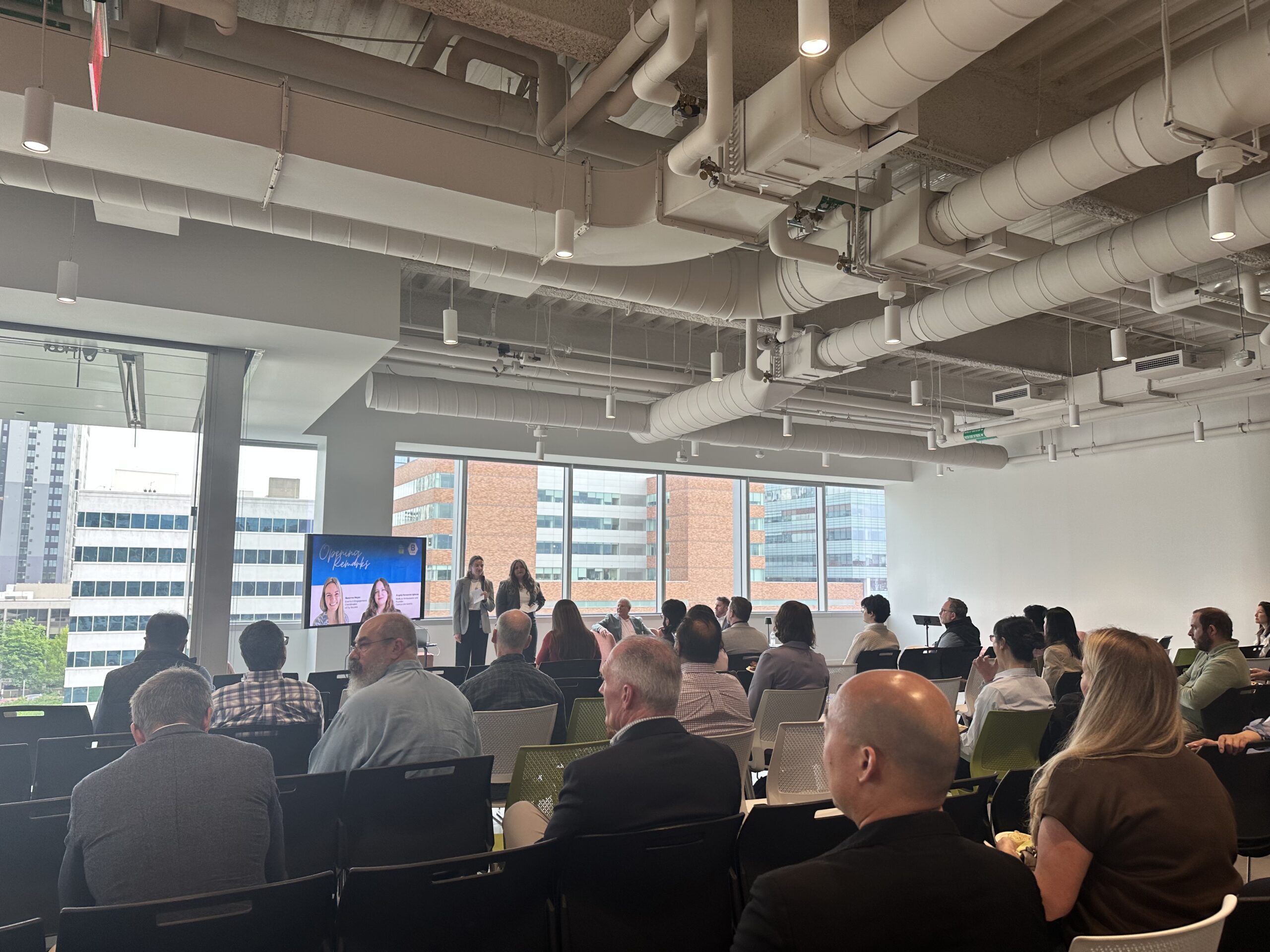
That was the opening message from Stephen M. Perry, founder and CEO of Kymanox, as he took the stage at a recent TED event focused on the future of healthcare and life sciences. Perry’s talk—equal parts roadmap and rallying cry—outlined a decade of transformation ahead, where AI, blockchain, and biotechnology converge to redefine trust, therapy, and even what it means to live a healthy life.
The Acceleration Effect
Perry began by framing AI as the engine of acceleration in modern innovation. Borrowing from the world of Formula One racing, he likened data to distance, the internet to speed, and AI to the surge of acceleration that changes everything.
“You only feel the acceleration,” he said. “That’s the AI.”
From home PCs taking nearly a decade to reach a million users to ChatGPT doing the same in under five days, Perry used the comparison to underscore the exponential pace of change. AI’s impact, he argued, is already visible in low-risk environments—like writing, coding, or design—but it’s rapidly moving into high-consequence domains such as clinical decision-making, drug development, and personalized healthcare.
“AI today is phenomenal when the stakes are low,” Perry said. “Tomorrow, it will take on high-consequence decisions–and we need to be ready for that.”
The End of the Old Guard
Turning his focus to the “trust paradigm” that has long defined the pharmaceutical industry, Perry didn’t mince words. “If you go into big biopharma, the boardrooms look like this,” he said, pointing to a slide of older white men. “We make life-and-death decisions, and those decisions are built on trust—people do business with people they know. The problem is, old white men know other old white men.”
Perry’s point is about the outdated way trust operates in life science and healthcare. For decades, credibility has been built through personal networks and institutional reputation, not through transparent data. Trust has been something granted by relationships, not earned through proof.
That’s what’s changing. Perry argued that the next era of trust will be data-driven and decentralized, powered by blockchain and digital verification rather than backroom familiarity. “If you’re not on the chain,” he said, “no one’s going to trust you. That’s the great equalizer.”
In this new model, trust isn’t about who you know; it’s about what can be verified. Blockchain replaces legacy gatekeeping with open validation, allowing new leaders, innovators, and even patients to participate on equal footing. Perry called it the democratization of credibility, a future where transparency replaces hierarchy as the foundation of trust.
What’s Coming by 2030
Perry’s forecast for the rest of the decade was both sweeping and specific. He predicted a series of technological mergers between diagnosis and monitoring, medicine and wellness, carbon-based drugs and silicon-based apps that will blur the boundaries between traditional healthcare and digital therapeutics.
“We don’t have a healthcare system,” Perry said. “We have a sick-care system. That’s going to merge with wellness.”
He outlined how Eastern medicine’s observational science could soon find validation through AI’s ability to interpret large-scale data sets, offering a new bridge between holistic and evidence-based care.
In Perry’s 2030 vision, personalized medicine, home-based care, microbiome management, and Medicine 3.0–a shift from reactive to proactive care–will shape the next frontier. Even performance metrics will evolve as the industry moves from optimizing lifespan to optimizing “healthspan,” focusing on quality and mobility rather than years lived.
The Coming Reset in Biotech Economics
Perry warned that the biotech model itself is reaching an inflection point. The cost of goods in advanced therapies, especially in cell and gene therapy, is “blowing up the math” that once made biotech profitable. He cited several recent examples of companies abandoning billion-dollar cell therapy programs because the economics no longer worked.
By 2030, he said, companies will need evidence not just for the FDA but for payers as well. “Instead of buying a therapy,” Perry said, “you’re going to lease the benefit of the therapy.”
Betting on the Future — and the Little Guy
At Kymanox, Perry said the company is positioning itself to support the next wave of life science entrepreneurs. “Forty percent of our business next year will come from startups with fewer than nine employees,” he noted. “We’ve always served the Pfizers and the Mercks, but the real opportunity now is with the hyper-virtual companies.”
Kymanox focuses on combination products—innovations that merge drug delivery, digital therapy, and multi-API treatments—to help startups advance therapies faster with lower risk and cost. Perry described the strategy as a “low-hanging fruit” approach that still pushes the boundaries of patient care.
A Call for Optimism and Context
Although Perry’s talk was grounded in pragmatism, he closed with a distinctly human message.
“There’s a dark side to AI,” he acknowledged. “You’ll hear data scientists talk about mass unemployment or the end of civilization. But greatness is only possible with an unwavering belief that the future is bright.”
He urged leaders to balance optimism with realism and to treat context as the ultimate differentiator in a fast-moving world. “Breadth is the new depth,” he said. “For 20 years, we rewarded the dot-makers. Now it’s time to reward the dot-connectors.”
As the audience applauded, Perry offered one final reflection: “Winning isn’t about arriving at the end of the game; it’s about continuing to play.”
See Stephen’s full BioBuzz Presentation below.
View the other talks from the life science track at DCSTW here.